

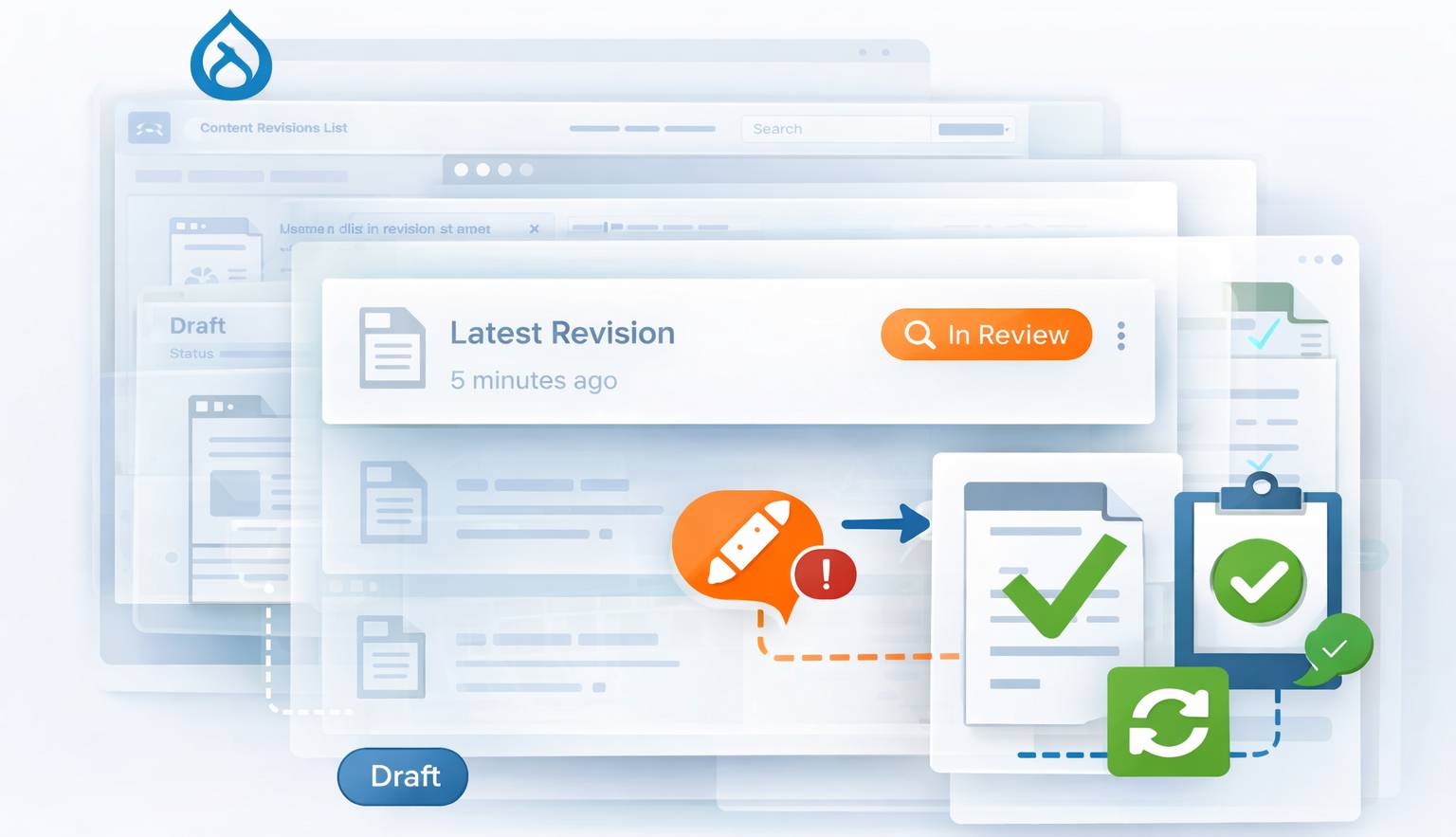
Understanding Current and Latest Revisions
When editors update published content in Drupal, the system can save those changes as a new revision without immediately replacing what visitors see on the website. This is a valuable feature because it allows teams to prepare updates, request approval, or schedule content changes without affecting the live page.
For example, a page may still be publicly visible in its published form while a newer version is waiting in a moderation state such as Request for Review or Request for Unpublish. From an editorial point of view, the pending version is the one that matters most. It represents the work that reviewers need to assess.
If a dashboard is built around the published version instead of the latest revision, it can give an incomplete picture of the editorial process. The content may exist, the moderation workflow may be functioning properly, and the revision may be ready for review, yet the dashboard can still fail to show it correctly.
Why Dashboard Results Can Be Misleading
This issue often becomes visible in two ways. First, a moderation filter may fail to return content that editors know is waiting for approval. A page that has been moved into Request for Unpublish, for example, may not appear in the filtered results if the dashboard is reading the currently published version instead of the most recent revision.
Second, content lists can appear out of date when the changed date shown in the dashboard comes from the published version rather than the latest editorial revision. In practice, that means recently updated content may appear older than it really is, causing it to fall lower in lists or disappear from view when teams expect to see it near the top.
These issues are especially noticeable when teams update content that has already been published. New content may still appear correctly simply because its first saved revision and latest revision are closely aligned. Existing published content, however, exposes the difference much more clearly.
What an Editorial Dashboard Should Show
An editorial dashboard should help reviewers understand the true status of work in progress. To do that effectively, it needs to reflect the latest revision in three important areas.
Moderation Status in Filters
When users filter content by moderation state, the results should be based on the latest revision. If an editor has submitted a page for review or requested that it be unpublished, that content should appear immediately in the matching dashboard filter.
Moderation Status in the Table
The status displayed in the results table should also reflect the newest revision. This gives reviewers a clear and accurate picture of what stage each item is in and avoids situations where the table appears to contradict the actual workflow.
Changed Date in the Table
The changed date should represent the most recent revision as well. This is essential for both visibility and prioritization. Editorial teams often rely on changed dates to understand what has been updated most recently and what needs prompt attention.
Why Revision-Aware Dashboards Matter
When a dashboard reads the latest revision correctly, the moderation workflow becomes much easier to manage. Reviewers can trust the filters, lists become more meaningful, and the overall publishing process feels more transparent. This is particularly important for organizations with multiple editors, approvers, and high publishing volume, where even small inconsistencies can slow down decision-making.
Using revision-aware data also respects the way Drupal is designed to handle content governance. It allows the public website to remain stable while internal teams continue reviewing and approving new changes behind the scenes.
Recommended Approach
The most reliable approach is to configure dashboard views so they use revision-based data for moderation state and changed date rather than relying only on the currently published content record. This ensures the dashboard reflects the true editorial queue and supports the workflow as intended.
In other words, the dashboard should be built for reviewers, not for site visitors. When that principle is followed, Drupal's content revision system becomes a strength rather than a source of confusion.
Conclusion
Accurate editorial dashboards depend on more than just a working moderation workflow. They also depend on showing the right version of each content item. In Drupal, that means using the latest revision for status, filtering, and changed date whenever the goal is to support review and approval.
When dashboards are aligned with the latest revision, teams gain a clearer view of pending work, improve editorial coordination, and reduce the risk of missed updates. The result is a smoother, more reliable publishing process that better supports both content teams and business stakeholders.